Direct answer
Industrial material guide
Secondary raw materials become credible when the pathway is traceable
For industrial buyers, a secondary raw material is not a generic recycled input; it is a qualified stream with stable behavior and operational evidence.
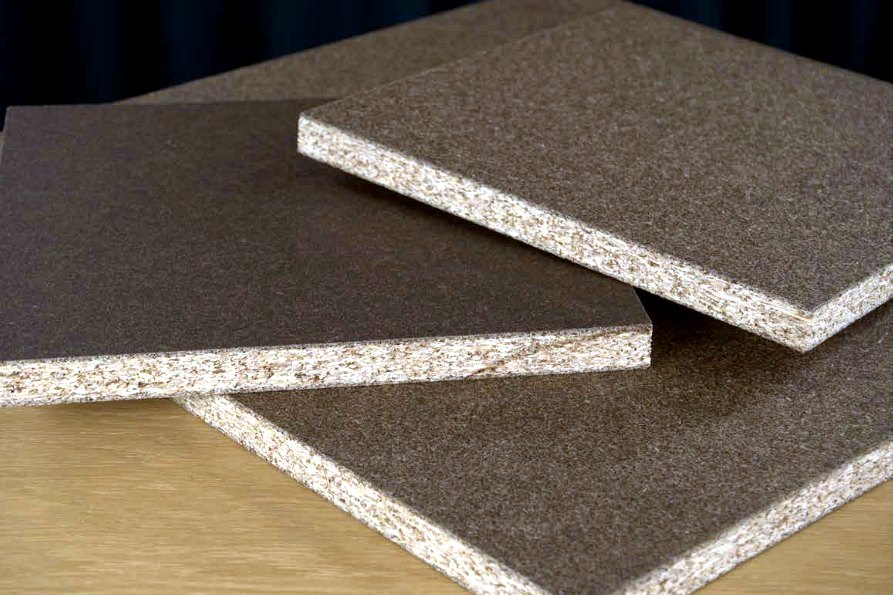
The strongest pathways combine material evidence with buyer-sector acceptance.
Secondary inputs need clear source, quality and logistics controls.
Circularity claims should stay tied to visible stream data and validated operations.
Decision data
Decision data
Source and industrial process context
Quality parameters and stability over time
Pre-treatment, storage and transport conditions
Buyer application, sampling result and documentation trail
Qualification framework
Technical qualification evidence
Evaluation scope
Explains how production scrap and B2B material streams are qualified as secondary raw material candidates in Turkey.
Technical data
Composition, quality stability, contamination, moisture, particle size, storage, pre-treatment, packaging, monthly volume and buyer application.
Traceability
Source, handling, sample result, buyer acceptance and operational closure decisions remain visible so circularity claims can be verified.
Pathway examples
Biocomposites, recycled logistics equipment and mineral/filler applications connect the concept to practical material families.
Pathway process
Pathway process
- ClassifySeparate by-product, production scrap, secondary material and disposal-only streams.
- QualifyCheck composition, contamination, consistency and pre-treatment needs.
- MatchMap the stream to buyer sectors, applications and standards.
- DocumentKeep source, handling, pathway and acceptance evidence available.
Best-fit use cases
Best-fit use cases
Biocomposites
Organic fiber and filler streams for panels, molded products and decorative surfaces.
Recycled logistics equipment
Sorted polymer scrap for pallets, crates and technical parts.
Mineral/filler applications
Granular or mineral outputs after contamination and particle-size checks.
Material pathway evidence
Material pathway evidence
FAQ
Questions
What is a secondary raw material?
It is a non-primary material stream that can serve as an input when quality, consistency, legal handling and buyer requirements are met.
Are all recycled materials secondary raw materials?
Not necessarily. A recycled or by-product stream must still satisfy the target application's technical and operational thresholds.
Why does traceability matter?
Traceability protects commercial acceptance, reporting credibility and secure operational closure when a stream does not meet the pathway threshold.
Send a material stream
Send a material stream
Share photos, volume, location and current handling method. We will separate value-pathway potential from secure operational closure needs.